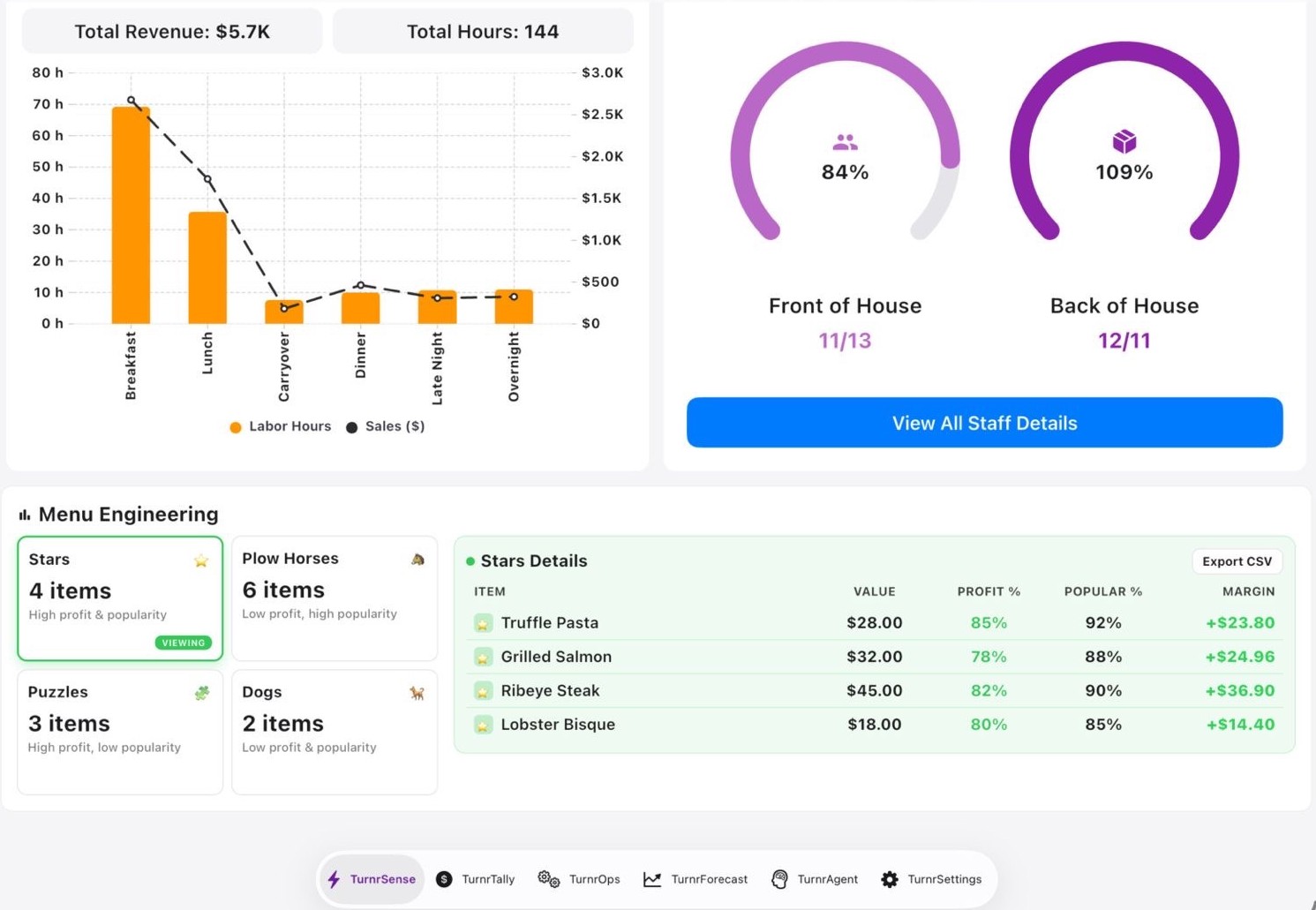
In multi-unit restaurant operations, missing context costs more than missing reports. If sales are up but labor utilization is down, a GM needs both signals in one view, at one time, with one recommendation. Separate dashboards create separate decisions.
The biggest gaps we see are cross-system gaps: POS events without staffing context, invoice changes without menu impact, and weather shifts without forecast adjustment. Each gap appears small. Together they create expensive drift.
Where operator time disappears
Across hundreds of operator conversations, the largest hidden tax was not service—it was chasing information that should have arrived ready: duplicate entry, reconciling exports, and waiting on someone else’s report. Recovering time starts with pushing signal to roles, not adding another dashboard.
Why guesswork persists
Teams still lean on instinct when forecast, labor, and COGS live in different systems and the GM’s first coherent view arrives after the shift starts. When the morning briefing is incomplete, the default is muscle memory. Unifying context before open is how data replaces guesswork.
Where Restaurant Data Disconnects
Three costly blind spots
- Demand blindness: no shift-level forecast by location and daypart.
- Cost blindness: no live connection between invoices, COGS, and menu mix.
- Action blindness: data exists, but no owner and no deadline is assigned.
The practical fix is a daily operating model: unified morning view, manager action queue, and automatic escalation when KPIs cross thresholds. That turns data from a reporting artifact into a shift-level control system.
Operators that close these gaps move faster, waste less, and coach better. Better data quality does matter, but better decision timing matters more.
Signal coverage
Unify POS, labor, and inventory signals before optimizing decisions.
- POS
- Labor
- Inventory
- Missing
Operator playbook
- Define the top three cross-system questions managers need daily.
- Unify those answers into a single morning dashboard.
- Review weekly where decisions were delayed due to missing context.
Where teams slip
Many teams improve reporting cadence but not context quality. The breakthrough comes from linking demand, labor, and cost in one decision flow.
Keep Reading
- Forecasting & Daily Operating Control
- Why 73% of Restaurant Tech Fails in Year One
- Restaurant Management Tips: The Complete Operator's Guide
Close data gaps with a single operations command center