Most rollouts fail quietly. The system is “live,” but usage drops, reports become optional, and teams return to spreadsheets. The root cause is weak adoption design: unclear ownership, too many features at launch, and no weekly operating rhythm.
What successful teams do differently
- Start with one location or one process and expand after proof.
- Define role-based responsibilities before go-live day.
- Track only a few must-win KPIs in the first month.
- Run weekly adoption reviews with actions, not opinions.
Implementation is change management plus system setup. When teams treat it as only a technical handoff, usage decays. When they treat it as an operating upgrade, value compounds.
The first 60 days decide the first year. Keep scope tight, feedback fast, and ownership explicit.
Year-one adoption risk
When usage slips, ROI fades; monitor weekly actives and workflow depth.
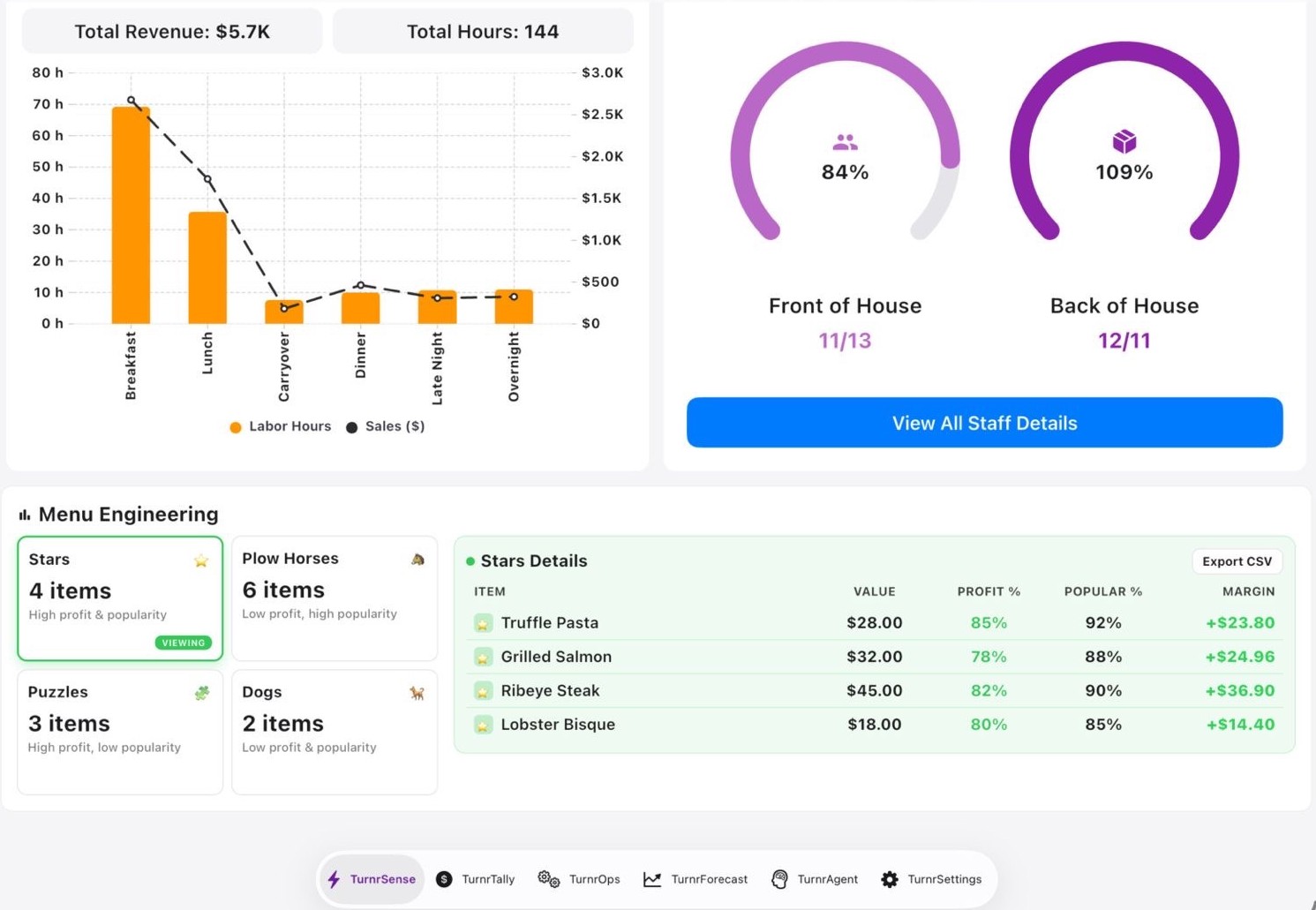
Building for the GM, not the CTO
Enterprise tools are often built for engineers and power users. Daily operations need defaults that work for the person opening at 6 AM: short workflows, restaurant language on the surface, and alerts tied to owner and due time. Technical depth can sit underneath; if the everyday path is not simple, adoption decays no matter how powerful the backend is.
AI beyond the hype
Useful AI in restaurants is proactive—it flags risk early, explains impact in plain terms, and names who should act. Evaluate vendors on fewer preventable service issues and less manager busywork, not on generic chatbots or feature counts that never reach the shift.
Operator playbook
- Define a 30-60-90 day adoption plan before go-live.
- Limit month-one scope to the few workflows with highest ROI.
- Review adoption and outcomes weekly with role-level ownership.
Where teams slip
Rollouts fail when training ends on launch day. Adoption needs active follow-through across multiple operating cycles.
Keep Reading
- From Prototype to Production: How TableTurnr Onboards Your Restaurant
- The $2.8 Trillion Problem: Data Gaps in Restaurant Ops
- Restaurant Management Tips: The Complete Operator's Guide
TableTurnr goes live in 48 hours -- designed so adoption sticks