Cutting labor cost does not mean cutting headcount. It means reducing mismatch between staffing and actual demand. Most overspend comes from avoidable patterns: peak over-coverage, late break planning, and reactive schedule edits.
Start with forecast quality
Use hourly forecast by location and daypart, not weekly averages. A manager scheduling from weekly averages almost always over-buffers. Reliable hourly forecasts let teams place the right roles at the right time.
Then improve shift design
- Stagger start times: avoid everyone clocking in before demand appears.
- Use coverage targets: tie FOH and BOH staffing to expected volume.
- Protect critical windows: move breaks away from peak pressure.
- Coach by data: compare planned vs actual labor by shift owner.
The goal is not fewer people. The goal is fewer idle minutes and fewer emergency adjustments. Operators that run this model usually improve labor efficiency while keeping service quality stable or better.
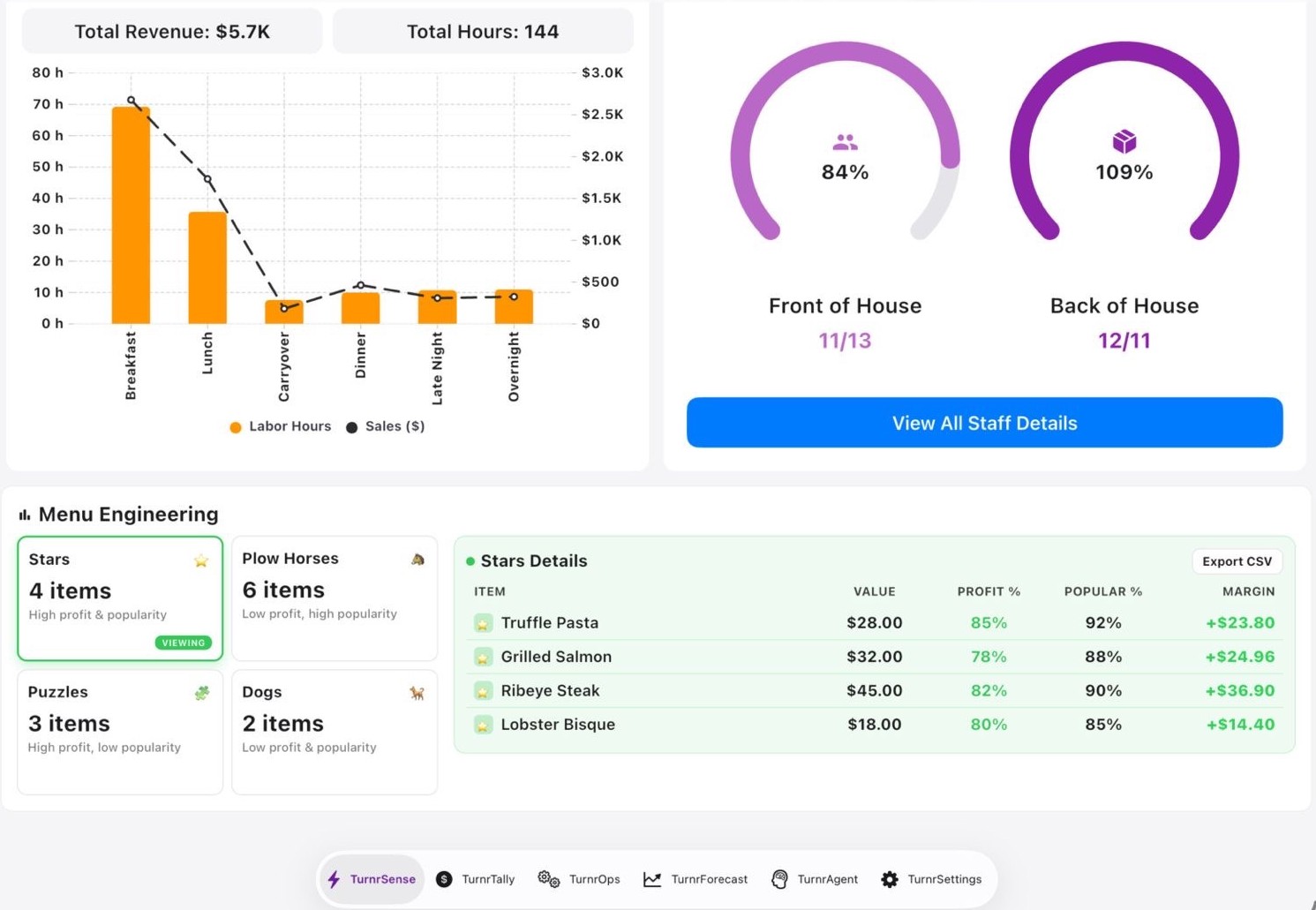
Labor cost snapshot
Align demand, staffing hours, and overtime before the week closes.
Staff retention and scheduling fairness
Turnover is often an operating-consistency problem, not only a hiring problem. When forecasts are noisy, schedules change late, and managers live in reactive mode, teams feel the chaos. Better forecasting and clearer handoffs reduce unnecessary schedule changes and make labor plans feel fair—which supports retention alongside labor percentage.
Track signals like schedule stability week over week, volume of late shift changes, and how quickly managers resolve staffing conflicts. Improving these usually lifts both labor efficiency and tenure.
Operator playbook
- Audit last four weeks of labor variance by daypart.
- Set coverage targets for peak and shoulder periods.
- Track schedule edits made within 24 hours of shift start.
Where teams slip
Labor programs fail when teams cut hours without improving forecast quality and shift design. Precision beats blanket cuts.
Keep Reading
- Forecasting & Daily Operating Control
- The $2.8 Trillion Problem: Data Gaps in Restaurant Ops
- Restaurant Management Tips: The Complete Operator's Guide
Demand-based staffing starts with better forecasts